FLAVORGENIE AIPOWERED PERSONALIZED RECIPE GENERATOR
Objective
The objective of the Recipe Recommendation System project is to develop an innovative platform that transforms the way users discover and plan meals. Leveraging Convolutional Neural Networks (CNNs), the system aims to analyze recipe images and text data, extracting meaningful features to enhance recommendation accuracy. By integrating CNNs with traditional recommendation methodologies, such as collaborative and content-based filtering, the system strives to provide personalized recipe suggestions tailored to individual tastes and dietary needs. Emphasis is placed on recognizing visually appealing dishes, identifying key ingredients, and considering cooking techniques to improve recommendation relevance. Through user-friendly interfaces and iterative refinement based on performance metrics and user feedback, the system aims to empower users to explore diverse culinary options effortlessly. Ultimately, the project seeks to simplify meal planning, inspire culinary creativity, and enrich the overall cooking experience for users.
Abstract
The "Recipe Recommendation System" project aims to revolutionize culinary exploration and recipe discovery by employing Convolutional Neural Networks (CNNs) in tandem with traditional recommendation methodologies. Unlike conventional recommendation systems that primarily rely on collaborative filtering or content-based approaches, our system integrates CNNs to process both image and text data associated with recipes. This novel approach offers a more holistic understanding of recipe content, enabling more accurate and personalized recommendations tailored to individual preferences and dietary requirements.
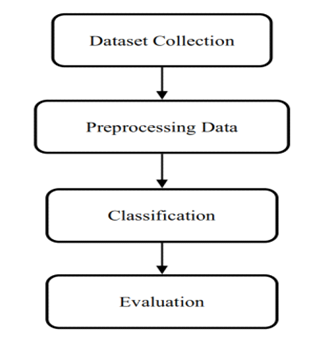
The system begins with the collection and preprocessing of a diverse dataset encompassing recipe images and corresponding text descriptions. These descriptions include ingredients, cooking instructions, and other relevant details. The CNN models are then trained on this dataset to extract meaningful features from recipe images and text, leveraging the spatial hierarchies captured by the convolutional layers for image recognition and the semantic understanding encoded by the subsequent layers for text analysis.
The integration of CNNs enhances the recommendation process in several key ways. Firstly, the image recognition capabilities enable the system to identify visually similar dishes, facilitating recommendations based on aesthetic appeal and presentation. Users can explore recipes that resonate with their culinary preferences simply by browsing through visually engaging images. Additionally, the CNNs are trained to recognize key ingredients and cooking techniques from recipe text, allowing the system to generate recommendations based on ingredient availability and dietary restrictions. For instance, users can input their pantry items or dietary preferences, and the system will suggest recipes that align with their needs.
Furthermore, the system incorporates traditional recommendation techniques such as collaborative filtering and content-based filtering to complement the CNN-based approach. By combining multiple recommendation strategies, our system provides a more comprehensive and accurate recipe recommendation experience. Evaluation of the system's performance will be conducted using standard metrics such as accuracy, precision, and recall, ensuring the effectiveness and reliability of the recommendation engine.
Ultimately, the "Recipe Recommendation System" aims to empower users to discover and explore a wide variety of culinary delights tailored to their tastes and dietary preferences. Whether seeking quick and easy weeknight meals or gourmet creations for special occasions, our system will serve as a valuable tool for culinary enthusiasts, novices, and seasoned chefs alike, fostering a deeper appreciation for the art and joy of cooking.
KEYWORDS: Recipe Discovery, CNN, Image Recognition.
NOTE: Without the concern of our team, please don't submit to the college. This Abstract varies based on student requirements.
Block Diagram
Specifications
• Hardware Requirements
Processor - I3/Intel Processor
Hard Disk - 160GB
Key Board - Standard Windows Keyboard
Mouse - Two or Three Button Mouse
Monitor - SVGA
RAM - 8GB
• Software Requirements:
Operating System : Windows 7/8/10
Server side Script : HTML, CSS, Bootstrap & JS
Programming Language : Python
Libraries : Flask, Pandas, Mysql.connector, Os, Smtplib, Numpy
IDE/Workbench : PyCharm
Technology : Python 3.6+
Server Deployment : Xampp Server
Database : MySQL


 Paper Publishing

Request Call Back
Would you like to receive a free callback now?
Choose the best time for callback:
Leave your message and we will contact you as soon as possible

6-2-85/B, Old Maternity Hospital Road, Thyagaraja Nagar, Tirupati, Andhra Pradesh – 517501
+91 9030333433
+91 9393939065
0877-2261612

Disclaimer - Takeoff Edu Group Projects are not associated or affiliated with IEEE in any way. The IEEE Projects mentioned here are mentioned in the context of student projects, whose ideas are derived from IEEE publications, not projects of or by IEEE.

