Exploring the Learning Analytics of Skill-Based Course using Machine Learning Classification Models
Objective
The objective of this study is to assess the correlation between students' experiences and their impressions of learning in skill-based courses. This is achieved by utilizing various machine learning classification models to predict these correlations based on student data and teacher evaluations. The study also aims to highlight the effectiveness of Additive Regression as a meta classifier in improving correlation prediction. Additionally, it recommends expanding the analysis to a larger dataset (OULA) for further model training and validation.
Abstract
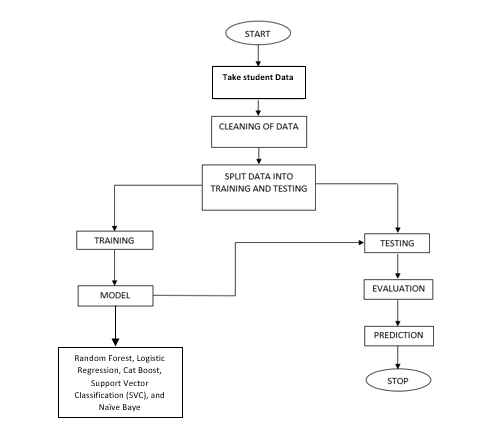
This study explores learning analytics of a skill-based course using various machine learning classification models, including Random Forest, Logistic Regression, CatBoost, Support Vector Classification (SVC), and Naïve Bayes. The objective is to categorize student outcomes into four classes: Pass, Distinction, Withdrawn, and Fail. These models are trained and validated using historical data from students who previously enrolled in the course, encompassing their engagement levels, assessment scores, and other relevant features that influence learning outcomes. Comparative analysis reveals that each model exhibits unique strengths in predicting different outcome classes, providing valuable insights into student performance and the efficacy of the instructional design. The findings from this investigation offer educators and academic institutions a robust framework for early identification of students at risk of underperformance or withdrawal, thereby enabling timely intervention to enhance student success in skill-based courses. Furthermore, the research contributes to the growing body of knowledge in learning analytics and machine learning applications in education, showcasing the potential of these technologies in fostering a supportive and adaptive learning environment for diverse student populations.
Keywords: Random Forest, Logistic Regression, CatBoost, Support Vector Classification (SVC), and Naïve Bayes.
NOTE: Without the concern of our team, please don't submit to the college. This Abstract varies based on student requirements.
Block Diagram
Specifications
H/W CONFIGURATION:
• Processor - I7/Intel Processor
• Hard Disk -160GB
• Key Board - Standard Windows Keyboard
• Mouse - Two or Three Button Mouse
• RAM - 8Gb
S/W CONFIGURATION:
• Operating System : Windows 11
• Server side Script : Python, HTML, MYSQL, CSS, Bootstrap.
• Libraries : PANDAS, Django
• IDE : PyCharm (or) VS code
• Technology : Python 3.10


 Paper Publishing

Request Call Back
Would you like to receive a free callback now?
Choose the best time for callback:
Leave your message and we will contact you as soon as possible

6-2-85/B, Old Maternity Hospital Road, Thyagaraja Nagar, Tirupati, Andhra Pradesh – 517501
+91 9030333433
+91 9393939065
0877-2261612

Disclaimer - Takeoff Edu Group Projects are not associated or affiliated with IEEE in any way. The IEEE Projects mentioned here are mentioned in the context of student projects, whose ideas are derived from IEEE publications, not projects of or by IEEE.

