Explainable Data Driven Digital Twins for Predicting Battery States in Electric Vehicles.
Objective
This work aims to develop an advanced Digital Twin model for predicting battery states (SOC and SOH) in electric vehicles, using algorithms like DNN, LSTM, CNN, SVR, Random Forests, and XGBoost. The goal is to enhance model accuracy, interpretability through explainable AI, and compare its performance with conventional methods, providing a smarter, more transparent solution for battery management and durability assessment in the EV industry.
Abstract
As the automotive industry rapidly advances towards electric vehicles (EVs), accurately predicting battery states is crucial for optimizing performance, safety, and longevity. This project presents a novel approach using Explainable Data-Driven Digital Twins to predict battery states in electric vehicles. The methodology integrates various advanced machine learning algorithms, including Deep Neural Networks (DNN), Long Short-Term Memory (LSTM) networks, Convolutional Neural Networks (CNN), Support Vector Regression (SVR), Support Vector Machines (SVM), Feedforward Neural Networks (FNN), Radial Basis Function networks (RBF), Random Forests (RF), and Extreme Gradient Boosting (XGBoost).
The primary objective of this study is to enhance the predictability of battery states by leveraging these diverse algorithms to build a comprehensive digital twin model. The model aims to provide accurate predictions of key battery parameters such as state of charge (SOC) and state of health (SOH) under various operational conditions. By utilizing explainable AI techniques, the project also focuses on interpreting and understanding the underlying factors influencing battery performance.
Our approach combines the strengths of different algorithms to improve prediction accuracy and robustness. Preliminary results indicate that the integrated model significantly outperforms traditional methods in terms of prediction accuracy and reliability. This research contributes to the development of more intelligent and adaptive battery management systems, which are essential for the future of electric mobility.
Keywords: Electric Vehicles, Battery State Prediction, Digital Twins, Machine Learning, Deep Neural Networks, LSTM, CNN, Support Vector Regression, Random Forests, Extreme Gradient Boosting.
NOTE: Without the concern of our team, please don't submit to the college. This Abstract varies based on student requirements.
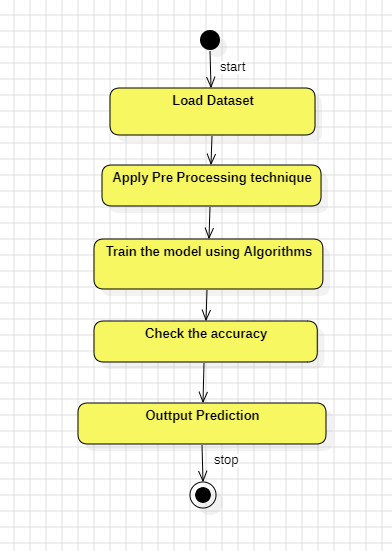
Block Diagram
Specifications
Hardware:
Operating system : Windows 7 or 7+
RAM : 8 GB
Hard disc or SSD : More than 500 GB
Processor : Intel 3rd generation or high or Ryzen with 8 GB Ram
Software:
Software’s : Python 3.10 or high version
IDE : Visual Studio Code.
Framework : Flask


 Paper Publishing

Request Call Back
Would you like to receive a free callback now?
Choose the best time for callback:
Leave your message and we will contact you as soon as possible

6-2-85/B, Old Maternity Hospital Road, Thyagaraja Nagar, Tirupati, Andhra Pradesh – 517501
+91 9030333433
+91 9393939065
0877-2261612

Disclaimer - Takeoff Edu Group Projects are not associated or affiliated with IEEE in any way. The IEEE Projects mentioned here are mentioned in the context of student projects, whose ideas are derived from IEEE publications, not projects of or by IEEE.

