Evaluating Fairness of Machine Learning Models Under Uncertain and Incomplete Information
Objective
The objective of the "Evaluating Fairness of Machine Learning Models Under Uncertain and Incomplete Information" project is to assess the fairness of machine learning models in scenarios where data is uncertain or incomplete. By examining how these models perform when faced with uncertainty and missing information, the project aims to uncover potential biases or disparities that may arise. Through rigorous evaluation methodologies and fairness metrics, the project seeks to provide insights into the robustness and reliability of machine learning systems in real-world applications. Ultimately, the goal is to develop strategies for ensuring fairness and equity in algorithmic decision-making processes, even when dealing with uncertain or incomplete data.
Abstract
In the realm of machine learning, ensuring fairness and equity in predictive models is paramount, especially in sensitive domains such as income prediction. This project delves into the evaluation of fairness in machine learning models operating under conditions of uncertainty and incomplete information. Leveraging a dataset encompassing features such as hours-per-week, age, capital-gain, capital-loss, workclass, education, education-num, marital-status, relationship, race, gender, native-country, and occupation, the study employs a diverse set of algorithms including Gradient Boosting, Linear Regression, Logistic Regression, XGBoost Regressor, and a Hybrid Algorithm.
The primary objective is to assess the fairness of these models in predicting individuals' income levels. By scrutinizing their performance against a backdrop of incomplete and uncertain information, the project aims to shed light on potential biases and disparities inherent in the predictive outcomes. The analysis accounts for various dimensions of fairness, including demographic parity, equal opportunity, and disparate impact, to provide a comprehensive understanding of model behavior.
Through rigorous evaluation and comparison, this research contributes to the advancement of fair and equitable machine learning practices. The findings offer insights into the strengths and limitations of different algorithms under varying conditions of data incompleteness and uncertainty. Ultimately, this project strives to foster the development of more transparent, accountable, and socially responsible machine learning systems.
Keywords: Fairness evaluation, Machine learning, Uncertainty, Incomplete information, Socio-demographic features, Bias mitigation, Gradient Boosting, Logistic Regression, XGBoost.
NOTE: Without the concern of our team, please don't submit to the college. This Abstract varies based on student requirements.
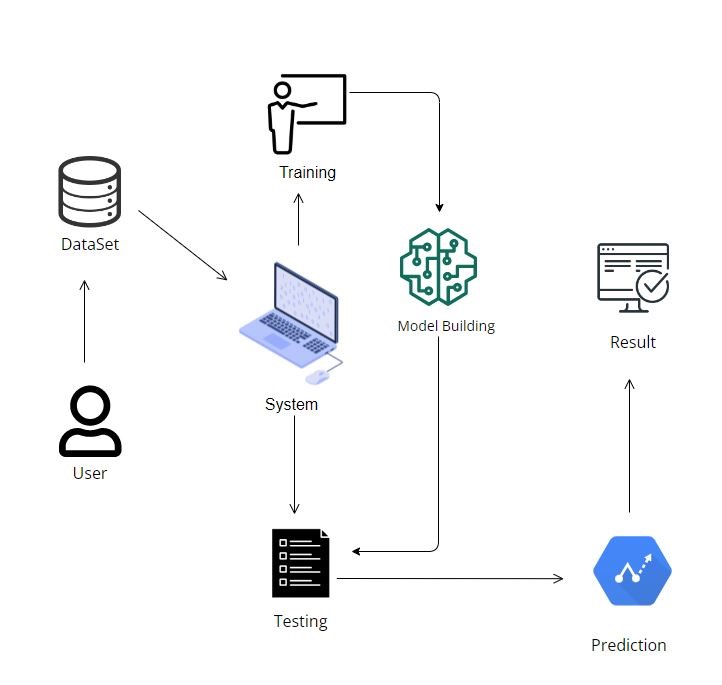
Block Diagram
Specifications
Hardware Requirements
· Processor : I3/Intel Processor
· Hard Disk : 160GB
· Key Board : Standard Windows Keyboard
· Mouse : Two or Three Button Mouse
· Monitor : SVGA
· RAM : 8GB
Software Requirements:
· Operating System : Windows 7/8/10
· Server side Script : HTML, CSS, JS
· Programming Language : Python
· Libraries : Django, Pandas, Numpy, Scikit:learn
· IDE/Workbench : Visual Studio Code
· Technology : Python 3.6+


 Paper Publishing

Request Call Back
Would you like to receive a free callback now?
Choose the best time for callback:
Leave your message and we will contact you as soon as possible

6-2-85/B, Old Maternity Hospital Road, Thyagaraja Nagar, Tirupati, Andhra Pradesh – 517501
+91 9030333433
+91 9393939065
0877-2261612

Disclaimer - Takeoff Edu Group Projects are not associated or affiliated with IEEE in any way. The IEEE Projects mentioned here are mentioned in the context of student projects, whose ideas are derived from IEEE publications, not projects of or by IEEE.

