Emotion Recognition using Speech Processing
Objective
Clear research objectives are vital for guiding the direction of the study and ensuring focused investigation into specific areas of interest. In the context of this dissertation, the research objectives are designed to address the overarching, goal of enhancing speech emotion recognition using Convolutional Neural Networks (CNN) and Long Short- Term Memory (LSTM) architectures. Firstly, the primary objective is to develop and create a robust speech emotion recognition system capable of accurately classifying human emotions conveyed through speech signals. This involves designing and training CNN and LSTM models to effectively extract features from speech data and classify them into distinct emotional categories. Secondly, the research aims to evaluate the performance of the CNN and LSTM models in comparison to traditional approaches to speech emotion recognition. The suggested models' accuracy, efficiency, and robustness in capturing the subtle differences in human emotions would be achieved by extensive experimentation utilizing a variety of datasets.
Abstract
This project delves into advancing Emotion Recognition in Speech through the utilization of Convolutional Neural Networks (CNN) and Long Short-Term Memory (LSTM) models. By integrating these advanced techniques into speech processing, we aim to enhance the interpretation of human emotions from speech signals. Our objective is to refine human-computer interaction, with potential applications spanning mental health support and customer service analytics. The system harnesses CNN and LSTM architectures to extract features such as Mel-frequency cepstral coefficients (MFCC) and Chromogram for the precise classification of speech into emotional categories. Key stages of the project include data collection, feature extraction, emotion classification, model evaluation, real-time implementation, and user interface development. Challenges encompass navigating the nuanced nature of human emotions, accommodating speech pattern variations, and ensuring real-time processing capabilities. Through this endeavor, we endeavor to significantly contribute to the evolution of speech emotion recognition systems.
KEYWORDS: Emotion Recognition, Speech Processing, Convolutional Neural Networks (CNN), Long Short-Term Memory (LSTM), Mel-frequency cepstral coefficients (MFCC), Chromogram, Human-Computer Interaction, Mental Health Support, Customer Service Analytics, Feature Extraction, Model Evaluation, Real-Time Implementation, User Interface Development, Human Emotions, Speech Pattern Variations, Real-Time Processing.
NOTE: Without the concern of our team, please don't submit to the college. This Abstract varies based on student requirements.
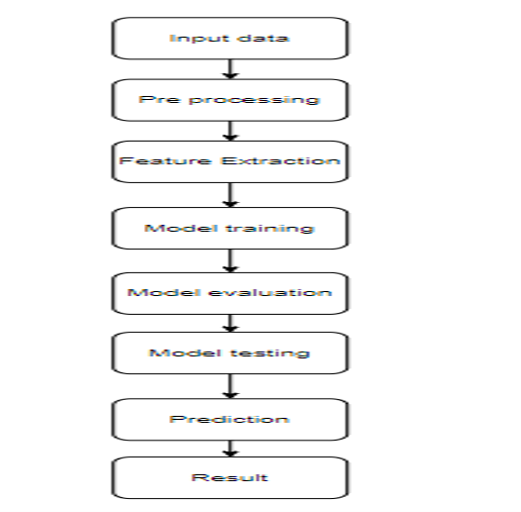
Block Diagram
Specifications
H/W Specifications:
Processor : I5/Intel Processor
RAM : 8GB (min)
Hard Disk : 128 GB
S/W Specifications:
Operating System : Windows 10
Server-side Script : Python 3.6
IDE : PyCharm, Jupyter notebook
Libraries Used : Numpy, IO, OS, Flask, Keras, pandas, tensorflow

Demo Video


Request for Video
 Paper Publishing
Request Call Back
Would you like to receive a free callback now?
Choose the best time for callback:
Leave your message and we will contact you as soon as possible

6-2-85/B, Old Maternity Hospital Road, Thyagaraja Nagar, Tirupati, Andhra Pradesh – 517501
+91 9030333433
+91 9393939065
0877-2261612

Disclaimer - Takeoff Edu Group Projects are not associated or affiliated with IEEE in any way. The IEEE Projects mentioned here are mentioned in the context of student projects, whose ideas are derived from IEEE publications, not projects of or by IEEE.

