Detection Of Calcium Carbide Based Ripeness In Mango Fruit
Also Available Domains Image Processing
Abstract
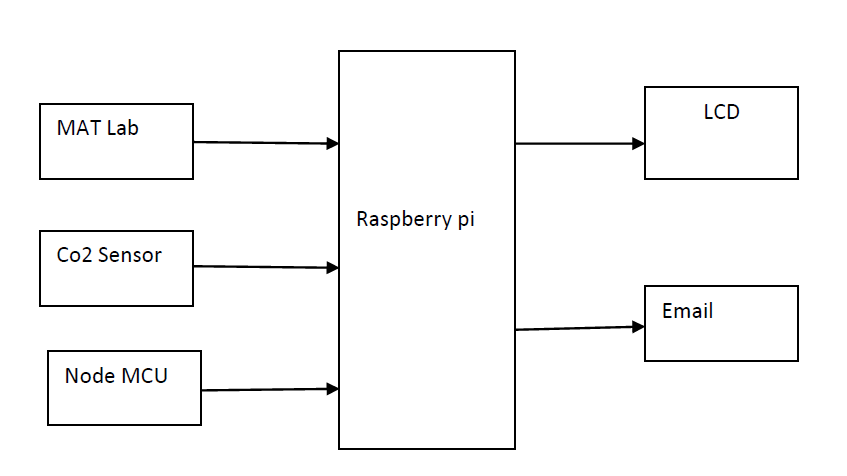
Mango is an important fruit crop across the world. Nowadays to ripe mangoes, Traders use many artificial methods (using chemicals). One of the artificial methods used is adding calcium carbide.CaC2 contains the traces of arsenic and phosphorous which is the carcinogenic agent. The threshold-based segmentation is used to segment the image from the bunch of mangoes and some discriminatory features are extracted in the frequency domain using a Haar filter. The variation in the features of the images is related to the difference between artificially ripened and naturally ripened mangoes. These statistical features are then analyzed for the identification of artificially ripened samples of these samples using vector machine classifiers. These results are given to microcontroller arrangement which intimates end-users via IoT and alerts the processing center. The experimental results indicate that the proposed method is efficient for the identification of artificially ripened mangoes.
NOTE: Without the concern of our team, please don't submit to the college. This Abstract varies based on student requirements.
Block Diagram
Specifications
Learning Outcomes
- Raspberry pi pin diagram and architecture
- How to install Raspberry pi IDE software
- Setting up and installation procedure for Raspbian
- Basic coding in Raspbian
- Basic of python language
- Arduino Pin diagram and Architecture
- How to install Arduino IDE Software
- Setting up and Installation procedures for Arduino IDE
- Introduction to Arduino IDE
- Commands in Embedded C
- How to install Libraries?
- Basic coding in Embedded C
- Working of CO2 Sensor
- How to interface CO2 sensor with Raspberrypi?
- Working of Nodemcu
- Working of LCD
- Interface LCD with Raspberry pi?
- About Project Development Life Cycle:
- Planning and Requirement Gathering (software’s, Tools, Hardware components, etc.,)
- Schematic preparation
- Code development and debugging
- Hardware development and debugging
- Development of the Project and Output testing
- Practical exposure to:
- Hardware and software tools.
- Solution providing for real time problems.
- Working with team/ individual.
- Work on Creative ideas.
- Project development Skills
- Problem analyzing skills
- Problem solving skills
- Creativity and imaginary skills
- Programming skills
- Deployment
- Testing skills
- Debugging skills
- Project presentation skills
- Thesis writing skills


 Paper Publishing

Request Call Back
Would you like to receive a free callback now?
Choose the best time for callback:
Leave your message and we will contact you as soon as possible

6-2-85/B, Old Maternity Hospital Road, Thyagaraja Nagar, Tirupati, Andhra Pradesh – 517501
+91 9030333433
+91 9393939065
0877-2261612

Disclaimer - Takeoff Edu Group Projects are not associated or affiliated with IEEE in any way. The IEEE Projects mentioned here are mentioned in the context of student projects, whose ideas are derived from IEEE publications, not projects of or by IEEE.

