Design and performance analysis of 4-bit Nano-Processor design for low area, low power and minimum delay using 32nm CMOS technology.
Objective
The major concentration is on the proposed 4-bit Nano processor using CMOS 32nm technology by using the Tanner EDA software tool.
Abstract
Despite progress in VLSI chip technologies, such as scaling transistor and device parameters, managing current flow between the source and drain terminals remains a challenge. To tackle this, transistors have been integrated into VLSI chips to provide better current control. This article explores the issues faced in CMOS technology and focuses on the development of a 4-bit Nano CPU using 32nm technology with the Tanner software tool.
The proposed Nano processor starts with a 4-bit ALU that includes all necessary universal gates, featuring a high-speed adder, multiplier, and multiplexer. Key components like the Carry Save Adder (CSA) and the multiplier are designed for optimization to enhance power efficiency and minimize area usage. Designed for reduction of power and delay by using Transmission technique.
The final step in this design process involves creating the Graphic Data System (GDS-II) through mask layout design. This design features logical gates such as AND, OR, XOR, NOT, and NAND, as well as SRAM, Encoder, Decoder, and ANN, all optimized for reduced power consumption. The main objective in this phase is to enhance both power efficiency and area utilization.
Keywords: CMOS Technology, CMOS, Gated Techniques, ANN, CSA, Nano Processors
NOTE: Without the concern of our team, please don't submit to the college. This Abstract varies based on student requirements.
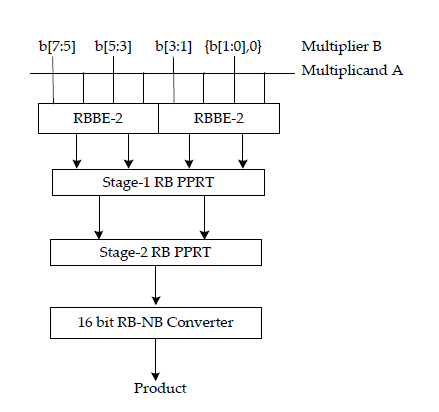
Block Diagram
Specifications
Software Requirements:
• Tool: Tanner EDA
Hardware Requirements:
• Microsoft® Windows XP
• Intel® Pentium® 4 processor or Pentium 4 equivalent with SSE support
• 512 MB RAM
• 100 MB of available disk space
Learning Outcomes


 Paper Publishing

Request Call Back
Would you like to receive a free callback now?
Choose the best time for callback:
Leave your message and we will contact you as soon as possible

6-2-85/B, Old Maternity Hospital Road, Thyagaraja Nagar, Tirupati, Andhra Pradesh – 517501
+91 9030333433
+91 9393939065
0877-2261612

Disclaimer - Takeoff Edu Group Projects are not associated or affiliated with IEEE in any way. The IEEE Projects mentioned here are mentioned in the context of student projects, whose ideas are derived from IEEE publications, not projects of or by IEEE.

