Design and Implementation of an Adaptive FPGA-Based Traffic Light Control System Using Verilog
Objective
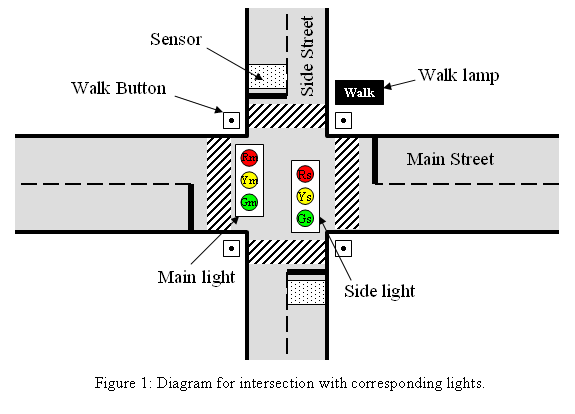
Adaptive Signal Timing Based on Traffic Conditions • Dynamically adjust traffic light durations (green, yellow, red) according to real-time traffic density rather than using a fixed timer. • Use sensors (vehicle detectors) to estimate traffic flow and modify signal phases to reduce congestion.
Abstract
NOTE: Without the concern of our team, please don't submit to the college. This Abstract varies based on student requirements.
Block Diagram
Specifications
Software Requirements:
· Xilinx ISE Tool/Xilinx Vivado
HDL: System VerilogLearning Outcomes
- Understanding of traffic light control logic and adaptive systems.
- Knowledge of Verilog HDL for FSM-based digital design.
- Hands-on experience with FPGA implementation and simulation.
- Ability to design real-time control systems using hardware logic.
- Understanding of adaptive algorithms in embedded systems.
- Development of practical skills applicable to smart traffic and automation projects.


Related Projects
 Paper Publishing

Request Call Back
Would you like to receive a free callback now?
Choose the best time for callback:
Leave your message and we will contact you as soon as possible

6-2-85/B, Old Maternity Hospital Road, Thyagaraja Nagar, Tirupati, Andhra Pradesh – 517501
+91 9030333433
+91 9393939065
0877-2261612

Disclaimer - Takeoff Edu Group Projects are not associated or affiliated with IEEE in any way. The IEEE Projects mentioned here are mentioned in the context of student projects, whose ideas are derived from IEEE publications, not projects of or by IEEE.

