Deep Learning-Based Drowsiness Detection System for Driver’s Safety.
Objective
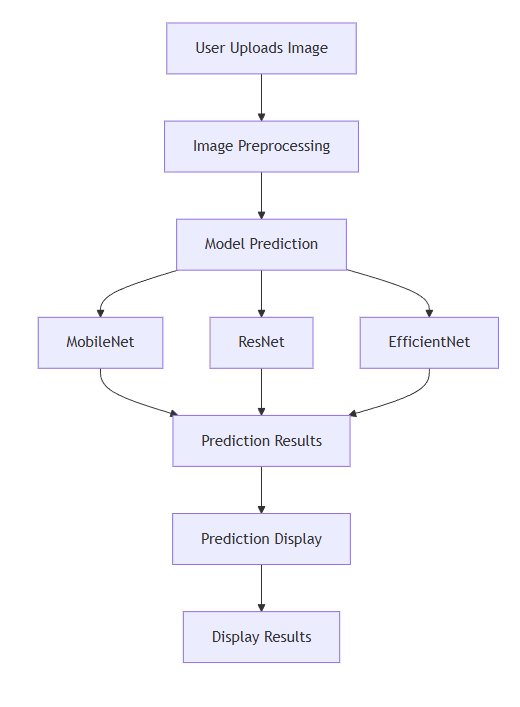
The objective of this project is to develop a real-time deep learning system that detects driver drowsiness using facial features. It employs MobileNet, ResNet, and EfficientNet to analyze eye aspect ratio and expressions, triggers alerts upon fatigue detection, and delivers a scalable, user-friendly web-based solution to enhance road safety globally.
Abstract
The Deep Learning-Based Drowsiness Detection System for Driver’s Safety addresses the critical issue of driver fatigue, which is a major contributor to road accidents. This system leverages advanced deep learning techniques, specifically MobileNet, ResNet, and EfficientNet, to monitor and detect signs of drowsiness in drivers based on their facial features. Using the Driver Drowsiness Dataset from Kaggle, the system processes facial landmarks, focusing on the eye aspect ratio and other relevant markers to identify drowsiness. The system uses image processing to detect the subtle changes in facial expressions that occur when a driver becomes fatigued. Upon detection of drowsiness, an alert is triggered to notify the driver, encouraging them to take necessary actions to prevent potential accidents.
The project is built using Python for the backend, with the Flask framework providing a lightweight, scalable solution. The front-end is developed using HTML, CSS, and JavaScript, allowing users to interact with the system in a simple and intuitive manner. The dataset provides diverse images that represent both alert and drowsy conditions, allowing the system to train models effectively and deliver accurate predictions. This work aims to contribute to the ongoing efforts to enhance road safety and reduce accidents caused by driver fatigue. With deep learning techniques, the system can be deployed in real-world applications, providing automated, continuous monitoring of drivers’ alertness levels. Ultimately, the goal of this system is to improve the overall safety of the driving experience by offering a reliable, efficient, and easily implementable solution to drowsiness detection.
Keywords: Deep Learning, Drowsiness Detection, Driver Safety, MobileNet, ResNet, EfficientNet, Facial Features, Eye Aspect Ratio, Driver Monitoring, Flask.
NOTE: Without the concern of our team, please don't submit to the college. This Abstract varies based on student requirements.
Block Diagram
Specifications
3.1 Hardware Requirements
Processor - I3/Intel Processor
Hard Disk - 160GB
Key Board - Standard Windows Keyboard
Mouse - Two or Three Button Mouse
Monitor - SVGA
RAM - 8GB
3.2 Software Requirements
Operating System : Windows 7/8/10
Programming Language : Python
Libraries : Pandas, Numpy, scikit-learn.
IDE/Workbench : Visual Studio Code.
Framework : Flask


 Paper Publishing

Request Call Back
Would you like to receive a free callback now?
Choose the best time for callback:
Leave your message and we will contact you as soon as possible

6-2-85/B, Old Maternity Hospital Road, Thyagaraja Nagar, Tirupati, Andhra Pradesh – 517501
+91 9030333433
+91 9393939065
0877-2261612

Disclaimer - Takeoff Edu Group Projects are not associated or affiliated with IEEE in any way. The IEEE Projects mentioned here are mentioned in the context of student projects, whose ideas are derived from IEEE publications, not projects of or by IEEE.

