Credit Scoring Prediction Using Deep Learning Models in the Financial Sector.
Also Available Domains Deep Learning
Objective
The objective of this project is to develop a robust credit scoring prediction system using deep learning models. It leverages advanced architectures such as Wide & Deep DNN, Autoencoder + DNN, and TabNet to accurately predict credit scores based on a variety of financial features. The project utilizes the dataset from Kaggle to train and evaluate these models, aiming to enhance the efficiency and reliability of credit scoring systems in the financial sector. Ultimately, it seeks to provide a more accurate, data-driven approach for assessing an individual's creditworthiness.
Abstract
Ensuring laboratory safety, particularly in high-risk environments like chemical and biological labs, is crucial in preventing accidents and protecting personnel. Personal Protective Equipment (PPE) plays a critical role in safeguarding workers from hazardous materials, machinery, and environmental risks. However, manually monitoring PPE usage in large laboratories or educational institutions can be inefficient, time-consuming, and prone to errors. This project presents an intelligent system for automated PPE detection using advanced object detection models like YOLOv5, YOLOv8, and YOLOv11. The proposed system uses deep learning techniques to detect whether laboratory personnel are wearing essential PPE such as gloves, goggles, lab coats, and masks.
By using deep learning models that specialize in object detection, the system processes images of laboratory environments and identifies PPE compliance with high accuracy. The system can also alert administrators when PPE compliance issues are detected, enabling corrective action. Additionally, the system is designed to be lightweight, ensuring it can operate on resource-constrained devices without the need for high-performance GPUs. The use of YOLO models ensures efficient performance, making it ideal for deployment in various laboratory settings. The system is built with flexibility in mind and can be integrated with existing infrastructure to enhance laboratory safety management.
This automated system provides several advantages over traditional manual inspection methods, including increased accuracy, faster monitoring, and reduced human involvement. With its ability to be deployed on low-resource devices, it opens up possibilities for widespread use across different laboratory environments. Ultimately, this intelligent system has the potential to improve laboratory safety practices, making them more reliable and less dependent on human oversight.
Keywords: PPE detection, YOLOv5, YOLOv8, YOLOv11, object detection, deep learning, laboratory safety, automated inspection, intelligent system, automated compliance.
NOTE: Without the concern of our team, please don't submit to the college. This Abstract varies based on student requirements.
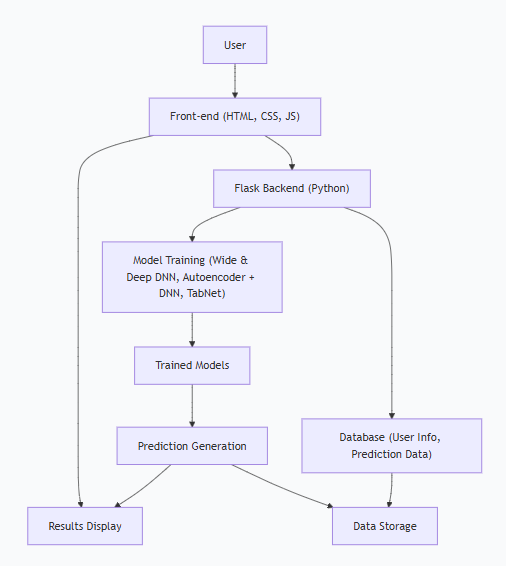
Block Diagram
Specifications
5.2 Hardware Requirements
The hardware requirements specify the physical resources necessary to run the system effectively. For this project, the following are the recommended hardware specifications:
- Processor: Intel Core i3 or better
- Hard Disk: 160GB or higher
- Keyboard: Standard Windows Keyboard
- Mouse: Two or Three Button Mouse
- Monitor: SVGA or higher resolution
- RAM: 8GB or more
5.3 Software Requirements
The software requirements specify the environment and tools necessary to develop, run, and deploy the system. The required software components for this project are as follows:
- Operating System: Windows 7/8/10 or Linux
- Programming Language: Python
- Libraries:
- Pandas: For data manipulation and analysis.
- Numpy: For numerical operations and handling multidimensional arrays.
- scikit-learn: For machine learning algorithms and evaluation metrics.
- PyTorch: For deep learning model development and training.
- IDE/Workbench: Visual Studio Code, Jupyter Notebooks, or PyCharm for development.


 Paper Publishing

Request Call Back
Would you like to receive a free callback now?
Choose the best time for callback:
Leave your message and we will contact you as soon as possible

6-2-85/B, Old Maternity Hospital Road, Thyagaraja Nagar, Tirupati, Andhra Pradesh – 517501
+91 9030333433
+91 9393939065
0877-2261612

Disclaimer - Takeoff Edu Group Projects are not associated or affiliated with IEEE in any way. The IEEE Projects mentioned here are mentioned in the context of student projects, whose ideas are derived from IEEE publications, not projects of or by IEEE.

