Credit Card Fraud Detection Using State-of-the-Art ML And DL Algorithms
Objective
The objective of credit card fraud detection using state-of-the-art machine learning (ML) and deep learning (DL) algorithms is to develop accurate and efficient models that can identify fraudulent transactions in real-time. The aim is to provide timely interventions and prevent fraudulent activities that can cause financial losses to both individuals and financial institutions.
Abstract
Fraud has become a trillion-dollar industry today. Some finance companies have separate domain expert teams and data scientists who are working on identifying fraudulent activities. Data Scientists often use complex statistical models to identify frauds. However, there are many disadvantages to this approach. Fraud detection is not real-time and therefore, in many cases fraudulent activities are identified only after the actual fraud has happened. These methodologies are prone to human errors. In addition, it requires expensive, highly skilled domain expert teams and data scientists. Nevertheless, the accuracy of manual fraud detection methodologies is low and due to that, it is very difficult to handle large volumes of data. More often, it requires time-consuming investigations into the other transactions related to the fraudulent activity in order to identify fraudulent activity patterns.
KEYWORDS: : Financial transactions, Fraud, Patterns etc..,
NOTE: Without the concern of our team, please don't submit to the college. This Abstract varies based on student requirements.
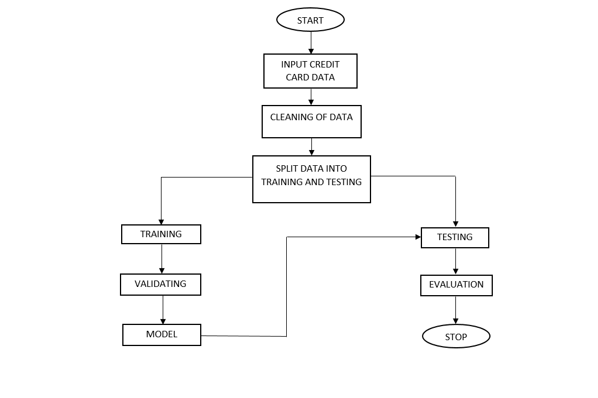
Block Diagram
Specifications
SOFTWARE FRONT END REQUIREMENTS
H/W CONFIGURATION:
Processor: I3/Intel Processor
RAM: 4GB (min)
Hard Disk: 128 GB
Key Board: Standard Windows Keyboard
Mouse: Two or Three Button Mouse
Monitor: Any
S/W CONFIGURATION:
Operating System: Windows 7+
Server-side Script: Python 3.6+
IDE: Jupyter or Colab IDE
Libraries Used: Pandas, Numpy, Scikit-Learn


 Paper Publishing

Request Call Back
Would you like to receive a free callback now?
Choose the best time for callback:
Leave your message and we will contact you as soon as possible

6-2-85/B, Old Maternity Hospital Road, Thyagaraja Nagar, Tirupati, Andhra Pradesh – 517501
+91 9030333433
+91 9393939065
0877-2261612

Disclaimer - Takeoff Edu Group Projects are not associated or affiliated with IEEE in any way. The IEEE Projects mentioned here are mentioned in the context of student projects, whose ideas are derived from IEEE publications, not projects of or by IEEE.

