Chilli Leaf Disease Identification and Categorization using Machine Vision
Objective
The objective of this system is to identify and categorize diseases in chilli plant leaves using machine vision techniques. It aims to analyze leaf images to detect disease patterns and classify them accurately. The system enhances early diagnosis to prevent crop damage. Additionally, it supports farmers in improving yield and crop health through timely intervention.
Abstract
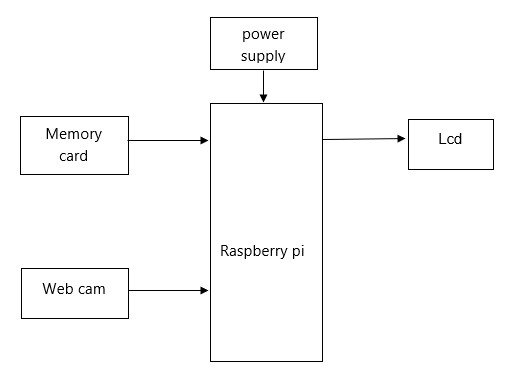
Chilli leaf disease identification is an important task in agriculture to ensure healthy crop production and reduce yield loss. This project presents a machine vision–based system for automatic identification and categorization of chilli leaf diseases using a Convolutional Neural Network (CNN) algorithm. The system is built using a Raspberry Pi as the main controller, integrated with a web camera for capturing real-time images of chilli leaves. The captured images are processed and analyzed using the trained CNN model to detect the presence of diseases. An LCD display is used to show the status and results of the detection process, while a buzzer provides an alert when an abnormal or diseased condition is identified. Additionally, when a diseased leaf is detected, the captured image along with the classification result is automatically sent to a registered email, enabling remote monitoring and timely action. The proposed system offers a cost-effective, efficient, and real-time solution for farmers to monitor crop health, enabling early detection, quick notification, and reducing the dependency on manual inspection.
NOTE: Without the concern of our team, please don't submit to the college. This Abstract varies based on student requirements.
Block Diagram
Specifications
Hardware Components
- Raspberry Pi
- Web Camera
- LCD Display
- Power Supply
- 12V Adapter
- SD Card
- Connecting Wires
Software Components
- Python
- Raspbian OS
Learning Outcomes
Learning outcomes:
• Raspberry Pi pin diagram and architecture
• How to install Raspberry Pi OS / setup software
• Setting up and installation procedure for Raspberry Pi
• Introduction to Raspberry Pi development environment
• Basic programming in Raspberry Pi (Python / C / C++)
• Basics of Embedded Python / Raspberry Pi programming
• Basics of IoT platforms
• Working of power supply
• About
Project Development Life Cycle:
• Planning and Requirement Gathering (software, tools, hardware components,
etc.)
• Schematic preparation
• Code development and debugging
• Hardware development and debugging
• Development of the project and output testing
•
Practical exposure to:
• Hardware and software tools
• Solution providing for real-time problems
• Working with team/individual
• Work on creative ideas
• Skills
developed:
• Project development skills
• Problem analyzing skills
• Problem solving skills
• Creativity and imaginative skills
• Programming skills
• Deployment
• Testing skills
• Debugging skills
• Project presentation skills
• Thesis writing skills


 Paper Publishing

Request Call Back
Would you like to receive a free callback now?
Choose the best time for callback:
Leave your message and we will contact you as soon as possible

6-2-85/B, Old Maternity Hospital Road, Thyagaraja Nagar, Tirupati, Andhra Pradesh – 517501
+91 9030333433
+91 9393939065
0877-2261612

Disclaimer - Takeoff Edu Group Projects are not associated or affiliated with IEEE in any way. The IEEE Projects mentioned here are mentioned in the context of student projects, whose ideas are derived from IEEE publications, not projects of or by IEEE.

