Bike-Sharing Demand Prediction Model
Objective
The main objective of a Bike-Sharing Demand Prediction Model is to accurately forecast the number of bikes that will be rented at a given time, considering various factors such as weather conditions, time of day, and historical data. This model aims to optimize bike availability, improve operational efficiency, and enhance user experience by enabling bike-sharing companies to proactively manage their fleet and meet customer demand.
Abstract
The demand for shared bicycles is influenced by a wide range of complex factors. The paper suggests a bicycle demand forecast model based on the Particle Swarm Optimization algorithm in light of the drawbacks of the present bicycle demand prediction models. The machine learning model's parameters can be modified for varied spatial contexts thanks to the clever algorithm's superior search capability. and temporal aspects of demand for bicycles. The simulation results confirm the effectiveness and viability of this improved algorithm, which can provide an effective method to support and study the effective scheduling and distribution of shared bicycles in cities. The shared bicycle data from Seoul, South Korea was chosen to train and test the model.
Keywords: Decision tree, Random forest, Xtreme gradient, catboost, LGBM and Machine learning techniquesNOTE: Without the concern of our team, please don't submit to the college. This Abstract varies based on student requirements.
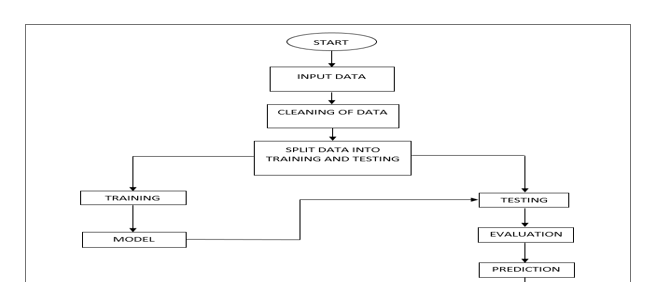
Block Diagram
Specifications
SOFTWARE FRONT END REQUIREMENTS
H/W CONFIGURATION:
- Processor - I3/Intel Processor
- Hard Disk - 160GB
- Key Board - Standard Windows Keyboard
- Mouse - Two or Three Button Mouse
- Monitor - SVGA
- RAM - 8GB
S/W CONFIGURATION:
- Operating System : Windows 7/8/10
- Server side Script : HTML, CSS, Bootstrap & JS
- Programming Language : Python
- Libraries : Flask, Pandas, Mysql.connector, Os, Smtplib, Numpy
- IDE/Workbench : PyCharm
- Technology : Python 3.6+
- Server Deployment : Xampp Server


 Paper Publishing

Request Call Back
Would you like to receive a free callback now?
Choose the best time for callback:
Leave your message and we will contact you as soon as possible

6-2-85/B, Old Maternity Hospital Road, Thyagaraja Nagar, Tirupati, Andhra Pradesh – 517501
+91 9030333433
+91 9393939065
0877-2261612

Disclaimer - Takeoff Edu Group Projects are not associated or affiliated with IEEE in any way. The IEEE Projects mentioned here are mentioned in the context of student projects, whose ideas are derived from IEEE publications, not projects of or by IEEE.

