Automatic Seat Identification System in Smart Transport using IoT and Image Processing
Objective
The main objective of this project is to create an automatic seat identification system in smart transport utilizing IoT and image processing techniques
Abstract
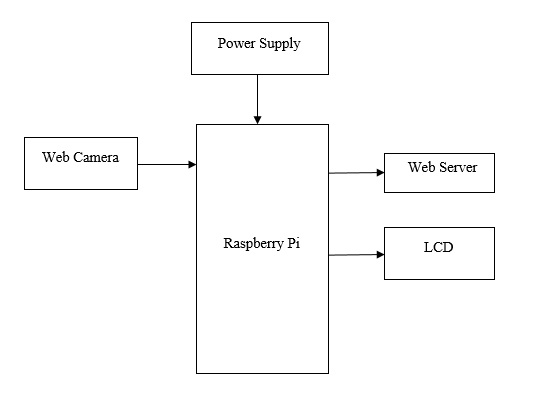
This project presents an innovative application of Raspberry Pi interfaced with a camera for passenger counting on buses using facial recognition technology. The system utilizes computer vision to identify and count the number of passengers on board by detecting and tracking faces. Once the counting process is complete, the Raspberry Pi controller uploads the passenger count data to a web server for further analysis and reporting. The core component of the system is a high-resolution camera installed inside the bus, continuously capturing images of passengers. The Raspberry Pi processes these images, employing facial recognition algorithms to identify individual faces and count the number of unique individuals present. This approach eliminates the need for manual counting, reducing errors and providing a more efficient and automated solution. And LCD present in the system will display the values.
After the passenger count is determined, the Raspberry Pi establishes a connection with a web server via the internet. The controller then securely uploads the passenger count data to the server's. This data can be accessed and analysed remotely, enabling transportation authorities to monitor bus occupancy levels, optimize routes, and improve passenger services. This Raspberry Pi-based bus passenger counting system offers, efficient, and cost effective solution for public transportation agencies to gather vital data for operational and planning purposes. It not only streamlines the passenger counting process but also contributes to enhanced public transportation services and improved overall efficiency in urban mobility management.
Keywords: Raspberry pi, camera, Bus Seat, Facial Recognition.
NOTE: Without the concern of our team, please don't submit to the college. This Abstract varies based on student requirements.
Block Diagram
Specifications
Hardware Requirements:
- Raspberry pi
- Camera
- Power Supply
- LCD
Software Requirements:
- Raspbian OS
- Python
Learning Outcomes
- Raspberry pi pin diagram and architecture
- How to install Rasbian Software
- Setting up and installation procedure for Raspberry pi
- Introduction to Raspberry pi
- Basic coding in Python
- Working of LCD
- Interface LCD with Raspberry pi
- Working of power supply
- About Project Development Life Cycle
- Planning and Requirement Gathering (software’s, Tools, Hardware components, etc.,)
- Schematic preparation
- Code development and debugging
- Hardware development and debugging
- Development of the Project and Output testing
- Practical exposure to
- Hardware and software tools.
- Solution providing for real time problems.
- Working with team individual.
- Work on Creative ideas.
- Project development Skills
- Problem analyzing skills
- Problem solving skills
- Creativity and imaginary skills
- Programming skills
- Deployment
- Testing skills
- Debugging skills
- Project presentation skills


 Paper Publishing

Request Call Back
Would you like to receive a free callback now?
Choose the best time for callback:
Leave your message and we will contact you as soon as possible

6-2-85/B, Old Maternity Hospital Road, Thyagaraja Nagar, Tirupati, Andhra Pradesh – 517501
+91 9030333433
+91 9393939065
0877-2261612

Disclaimer - Takeoff Edu Group Projects are not associated or affiliated with IEEE in any way. The IEEE Projects mentioned here are mentioned in the context of student projects, whose ideas are derived from IEEE publications, not projects of or by IEEE.

