Approximate Adders for Efficient Circuits: Advantages and Limitations Compared to RCA
Objective
1. To study the design principles of approximate adders and understand how they trade off computational accuracy for improvements in power, area, and speed. 2. To implement and analyze different types of approximate adder architectures, such as truncated adders, speculative adders, and error-tolerant designs.
Abstract
The design and analysis of efficient adders are crucial for enhancing the performance of digital systems, particularly in arithmetic and signal processing applications. This paper presents the comparison of two different types of adders Ripple Carry Adder (RCA), Carry Increment Adder (CIA) ,Carry Save adder(CSA),Carry Select Adder(CSLA),Carry Skip Adder(CSKA) using Reversible logic gates, based on selection line it will reconfigurable. Reversible logic is an emerging computational model that offers reduced power dissipation, which is a significant advantage in low-power digital circuit design. Each adder type is analyzed in terms of its logical structure, delay, area, and power consumption, with the aim of identifying how reversible gates can optimize these parameters. The implementation of basic reversible gates such as the Toffoli gate, Peres gate and Haghparast and Navi Gate(HNG) gate in constructing the adders .Through simulation and performance metrics, this paper highlights the potential of reversible logic in reducing energy consumption and enhancing speed in arithmetic operations. The results suggest that reversible logic can provide a promising avenue for the development of energy efficient and high-performance adders in future digital systems. The analysis of different adders using reversible logic gates is synthesized in Xilinx Vivado.
Keywords:-Ripple Carry Adder (RCA), Carry Increment Adder (CIA) ,Carry Save adder(CSA),Carry Select Adder(CSLA),Carry Skip Adder(CSKA),Verilog
NOTE: Without the concern of our team, please don't submit to the college. This Abstract varies based on student requirements.
Block Diagram
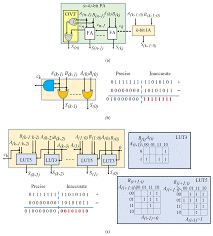
Specifications
Software Requirements
- Xilinx Vivado Design Suite (2020.2 or later)
- Verilog HDL for RTL design and implementation
- Vivado Simulator (XSIM) for functional and timing verification
- MATLAB (optional) for GPR data preprocessing, noise modeling, and result validation
Hardware Requirements
- Microsoft® Windows 10 / Windows 11 (64-bit)
- Intel® Core™ i5 / i7 Processor or equivalent
- Minimum 8 GB RAM
- Minimum 500 MB free disk space
Learning Outcomes
Understanding FIR Filter Design
Learners will understand the principles of FIR filters, including tap coefficients, impulse response, and frequency response.
Implementation of Transposed FIR Structure
Ability to implement and analyze the transposed form of FIR filters, understanding its advantages over direct form in terms of pipelining and critical path reduction.
Hardware Realization on FPGA/ASIC
Gain hands-on experience in designing and implementing high-speed digital filters on hardware platforms like FPGA, including resource optimization.
Pipeline and Latency Optimization
Learn techniques for pipelining digital circuits to improve speed and reduce processing latency.
Dynamic Coefficient Handling
Understand how to implement filters with dynamically changeable coefficients for adaptive filtering applications.
Fixed-Point Arithmetic and Numerical Accuracy
Understand fixed-point representation, numerical precision, and how transposed FIR filters improve stability in hardware.
Practical Applications of DSP Filters
Learn to apply FIR filters in real-world scenarios such as audio processing, communication systems, image processing, and biomedical signal filtering.
Comparison and Evaluation Skills
Develop the ability to compare different filter structures (direct vs transposed) in terms of hardware efficiency, speed, and accuracy.Understanding FIR Filter Design
Learners will understand the principles of FIR filters, including tap coefficients, impulse response, and frequency response.
Implementation of Transposed FIR Structure
Ability to implement and analyze the transposed form of FIR filters, understanding its advantages over direct form in terms of pipelining and critical path reduction.
Hardware Realization on FPGA/ASIC
Gain hands-on experience in designing and implementing high-speed digital filters on hardware platforms like FPGA, including resource optimization.
Pipeline and Latency Optimization
Learn techniques for pipelining digital circuits to improve speed and reduce processing latency.
Dynamic Coefficient Handling
Understand how to implement filters with dynamically changeable coefficients for adaptive filtering applications.
Fixed-Point Arithmetic and Numerical Accuracy
Understand fixed-point representation, numerical precision, and how transposed FIR filters improve stability in hardware.
Practical Applications of DSP Filters
Learn to apply FIR filters in real-world scenarios such as audio processing, communication systems, image processing, and biomedical signal filtering.
Comparison and Evaluation Skills
Develop the ability to compare different filter structures (direct vs transposed) in terms of hardware efficiency, speed, and accuracy.


 Paper Publishing

Request Call Back
Would you like to receive a free callback now?
Choose the best time for callback:
Leave your message and we will contact you as soon as possible

6-2-85/B, Old Maternity Hospital Road, Thyagaraja Nagar, Tirupati, Andhra Pradesh – 517501
+91 9030333433
+91 9393939065
0877-2261612

Disclaimer - Takeoff Edu Group Projects are not associated or affiliated with IEEE in any way. The IEEE Projects mentioned here are mentioned in the context of student projects, whose ideas are derived from IEEE publications, not projects of or by IEEE.

