Anti-Theft technology of museum cultural relics based on internet of things
Also Available Domains WSN|Arduino|Raspberry pi
Objective
This project proposes a museum anti-theft scheme based on the Internet of Things (IoT) technology, which identifies whether the cultural relics are within the safe range through the passive RFID readers/writers.
Abstract
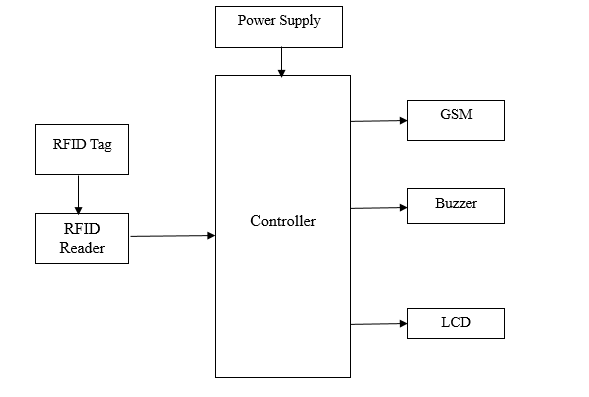
The preservation and protection of valuable cultural relics within museums are of paramount importance. With a steady influx of visitors, ensuring the security of these artefacts poses a considerable challenge. This abstract presents an innovative anti-theft technology solution for museums based on the Internet of Things (IoT). The system utilizes an ARM7 microcontroller interfaced with Radio-Frequency Identification (RFID) technology and a GSM module to address the issue of artefact theft. The primary goal of this system is to enhance the security of cultural relics by employing RFID tags that are discreetly attached to the artefacts. Each visitor is issued a unique RFID card upon entry. When a visitor approaches an artefact, the RFID reader reads both the visitor's card and the RFID tag on the artefact. In the event of an unauthorized attempt to remove an artefact, the system detects the break in the RFID connection, triggering an immediate response. Upon detection of a stolen artefact, the system activates a buzzer alarm to alert museum personnel and visitors. Simultaneously, it sends alert messages via the GSM module to designated security personnel or museum administrators. This swift notification allows for prompt action, such as locating the stolen artefact or preventing its removal from the premises. This anti-theft technology leverages the power of IoT, ARM7 microcontroller, RFID, and GSM communication to safeguard museum cultural relics effectively. By providing real-time alerts and enhancing security measures, this system ensures the protection of valuable artefacts, preserving our cultural heritage for generations to come.
Keywords:-ARM7, museums, RFID, IoT
NOTE: Without the concern of our team, please don't submit to the college. This Abstract varies based on student requirements.
Block Diagram
Specifications
Hardware Requirements:-
- ARM7
- RFID Tags
- RFID reader
- GSM
- Buzzer
- LCD
Software Requirements:-
- Embedded C
- Keil
Learning Outcomes
- ARM7 pin diagram and architecture
- How to install Keil IDE software
- Setting up and installation procedure for Keil
- Introduction to Keil IDE
- Basic coding in Keil IDE
- Working of power supply
- Working of RFID
- Interface RFID reader with ARM7 controller?
- Working of GSM
- Working of LCD
- Interface LCD with ARM7?
- About Project Development Life Cycle:
- Planning and Requirement Gathering (software’s, Tools, Hardware components, etc.,)
- Schematic preparation
- Code development and debugging
- Hardware development and debugging
- Development of the Project and Output testing
- Practical exposure to:
- Hardware and software tools.
- Solution providing for real time problems.
- Working with team/ individual.
- Work on Creative ideas.
- Project development Skills
- Problem analyzing skills
- Problem solving skills
- Creativity and imaginary skills
- Programming skills
- Deployment
- Testing skills
- Debugging skills
- Project presentation skills
- Thesis writing skills


 Paper Publishing

Request Call Back
Would you like to receive a free callback now?
Choose the best time for callback:
Leave your message and we will contact you as soon as possible

6-2-85/B, Old Maternity Hospital Road, Thyagaraja Nagar, Tirupati, Andhra Pradesh – 517501
+91 9030333433
+91 9393939065
0877-2261612

Disclaimer - Takeoff Edu Group Projects are not associated or affiliated with IEEE in any way. The IEEE Projects mentioned here are mentioned in the context of student projects, whose ideas are derived from IEEE publications, not projects of or by IEEE.

