Analyzing Factors Influencing Temporary and Permanent Work-Related Accident Disabilities: An Interpretable Machine Learning
Objective
This study explores the application of machine learning techniques to predict work-related accident outcomes, specifically distinguishing between temporary and permanent disabilities, using a CSV dataset containing various features related to workplace injuries. Feature selection methods were applied to identify the ten most influential predictors, which were then used to train several classification models, including CatBoost, AdaBoost, XGBoost, and Extra Trees Classifier. Among these, the Random Forest (RF) model achieved the highest performance, recording an accuracy of 99.01% and an F1-score of 86.59%, significantly improving upon the baseline model with an accuracy of 66.62%. The results emphasize the potential of machine learning in accurately predicting accident outcomes, thereby identifying early risk factors and supporting targeted health interventions in occupational settings. The study also highlights the importance of model interpretability to ensure informed decision-making and the implementation of effective safety measures based on predictive insights.
Abstract
This study explores the application of machine learning techniques to predict work-related accident outcomes, specifically distinguishing between temporary and permanent disabilities, using a CSV dataset containing various features related to workplace injuries. Feature selection methods were applied to identify the ten most influential predictors, which were then used to train several classification models, including CatBoost, AdaBoost, XGBoost, and Extra Trees Classifier.recording an accuracy of 99.01% and an F1-score of 86.59%, significantly improving upon the baseline model with an accuracy of 66.62%. The results emphasize the potential of machine learning in accurately predicting accident outcomes, thereby identifying early risk factors and supporting targeted health interventions in occupational settings. The study also highlights the importance of model interpretability to ensure informed decision-making and the implementation of effective safety measures based on predictive insights.
Keywords: Accident prevention, machine learning, occupational health, occupational safety, predictive models.
NOTE: Without the concern of our team, please don't submit to the college. This Abstract varies based on student requirements.
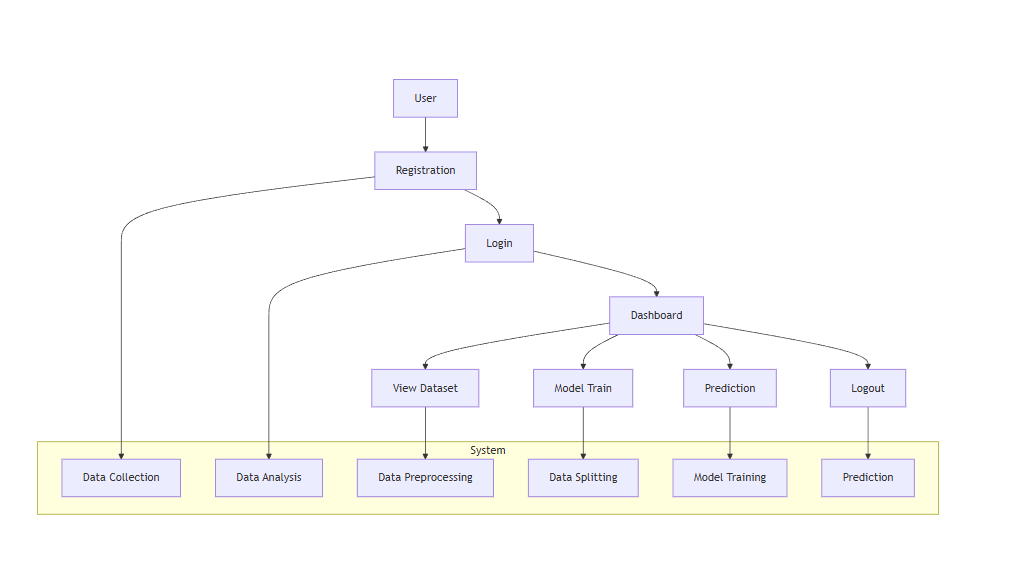
Block Diagram
Specifications
SOFTWARE REQUIREMENS
Operating System : Windows 7/8/10
Server side Script : HTML, CSS, Bootstrap & JS
Programming Language : Python
Libraries :Flask, Pandas, Hashlib, Keras, Sklearn, Numpy , Seaborn,Sqlite3,Xgboost
IDE/Workbench : VSCode
Server Deployment : Xampp Server
Database : SQLite
HARDWARE REQUIREMENTS
Processor - I3/Intel Processor
RAM - 8GB (min)
Hard Disk - 128 GB
Key Board - Standard Windows Keyboard
Mouse - Two or Three Button Mouse
Monitor - Any


 Paper Publishing

Request Call Back
Would you like to receive a free callback now?
Choose the best time for callback:
Leave your message and we will contact you as soon as possible

6-2-85/B, Old Maternity Hospital Road, Thyagaraja Nagar, Tirupati, Andhra Pradesh – 517501
+91 9030333433
+91 9393939065
0877-2261612

Disclaimer - Takeoff Edu Group Projects are not associated or affiliated with IEEE in any way. The IEEE Projects mentioned here are mentioned in the context of student projects, whose ideas are derived from IEEE publications, not projects of or by IEEE.

