Alzheimer’s Disease Detection Using Deep Learning
Objective
The main objective of this application is to detect the Alzheimer’s diseases using deep learning models.
Abstract
Alzheimer’s,
an irreparable brain disease, impairs thinking and memory while the aggregate
mind size shrinks which at last prompts demise. Early diagnosis of AD is
essential for the progress of more prevailing treatments. Machine learning
(ML), a branch of artificial intelligence, employs a variety of probabilistic
and optimization techniques that permits PCs to gain from vast and complex
datasets. As a result, researchers focus on using machine learning frequently
for diagnosis of early stages of AD. This paper presents a review, analysis and
critical evaluation of the recent work done for the early detection of AD using
ML techniques. Several methods achieved promising prediction accuracies,
however they were evaluated on different pathologically unproven data sets from
different imaging modalities making it difficult to make a fair comparison
among them. Moreover, many other factors such as pre-processing, the number of
important attributes for feature selection, class imbalance distinctively
affect the assessment of the prediction accuracy.
To overcome these limitations, a model is proposed which comprise of
initial pre-processing step followed by imperative attributes selection and
classification is achieved using association rule mining. Furthermore, this
proposed model based approach gives the right direction for research in early
diagnosis of AD and has the potential to distinguish AD from healthy controls.
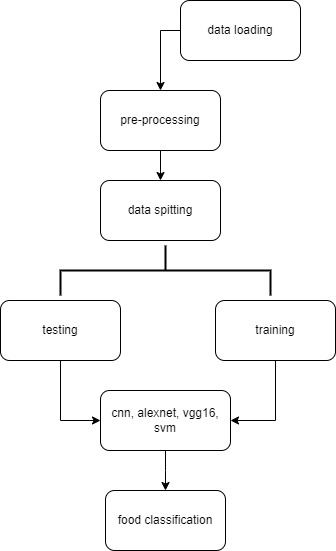
In this project we are using Modified CNN, Alex Net, VGG16, SVM, and Ensemble
Technique.
Keywords: Alzheimer ’s disease, Machine Learning, Computer Aided Diagnosis, Pathologically Proven Data, Early Diagnosis, Class Imbalance.
NOTE: Without the concern of our team, please don't submit to the college. This Abstract varies based on student requirements.
Block Diagram
Specifications
H/W Configuration:
Hard Disk : 160GB
RAM : 8Gb
S/W Configuration:
Operating System : Windows 7/8/10 .
Server side Script : HTML, CSS & JS.
IDE : Pycharm.
Libraries Used : Numpy, IO, OS, Flask, Keras, tensor flow.
Technology : Python 3.6+.
Processor : I3/Intel Processor
Learning Outcomes
LEARNING OUTCOMES:
· Practical exposure to
· Hardware and software tools
· Solution providing for real time problems
· Working with team/individual
· Work on creative ideas
· Testing techniques
· Error correction mechanisms
· What type of technology versions is used?
· Working of Tensor Flow
· Implementation of Deep Learning techniques
· Working of CNN algorithm
· Alex net, VGG16, SVM, Ensemble algorithms.
· Working of Transfer Learning methods
· Building of model creations
· Scope of project
· Applications of the project
· About Python language
· About Deep Learning Frameworks
· Use of Data Science
Demo Video


Request for Video
 Paper Publishing
Request Call Back
Would you like to receive a free callback now?
Choose the best time for callback:
Leave your message and we will contact you as soon as possible

6-2-85/B, Old Maternity Hospital Road, Thyagaraja Nagar, Tirupati, Andhra Pradesh – 517501
+91 9030333433
+91 9393939065
0877-2261612

Disclaimer - Takeoff Edu Group Projects are not associated or affiliated with IEEE in any way. The IEEE Projects mentioned here are mentioned in the context of student projects, whose ideas are derived from IEEE publications, not projects of or by IEEE.

