Advanced Adaptive Median Filter for Reducing Salt-and-Pepper Noise in GPR Data
Also Available Domains Finite State Machines
Objective
To develop and evaluate an advanced adaptive median filtering technique that: Effectively removes salt-and-pepper noise from Ground Penetrating Radar (GPR) data Preserves important subsurface features, such as layer boundaries and target reflections, without blurring edges Adapts filtering parameters based on local data characteristics to improve noise reduction performance Enhances the signal-to-noise ratio (SNR) and overall interpretability of GPR images Outperforms conventional median and standard adaptive median filters in terms of accuracy and detail preservation
Abstract
NOTE: Without the concern of our team, please don't submit to the college. This Abstract varies based on student requirements.
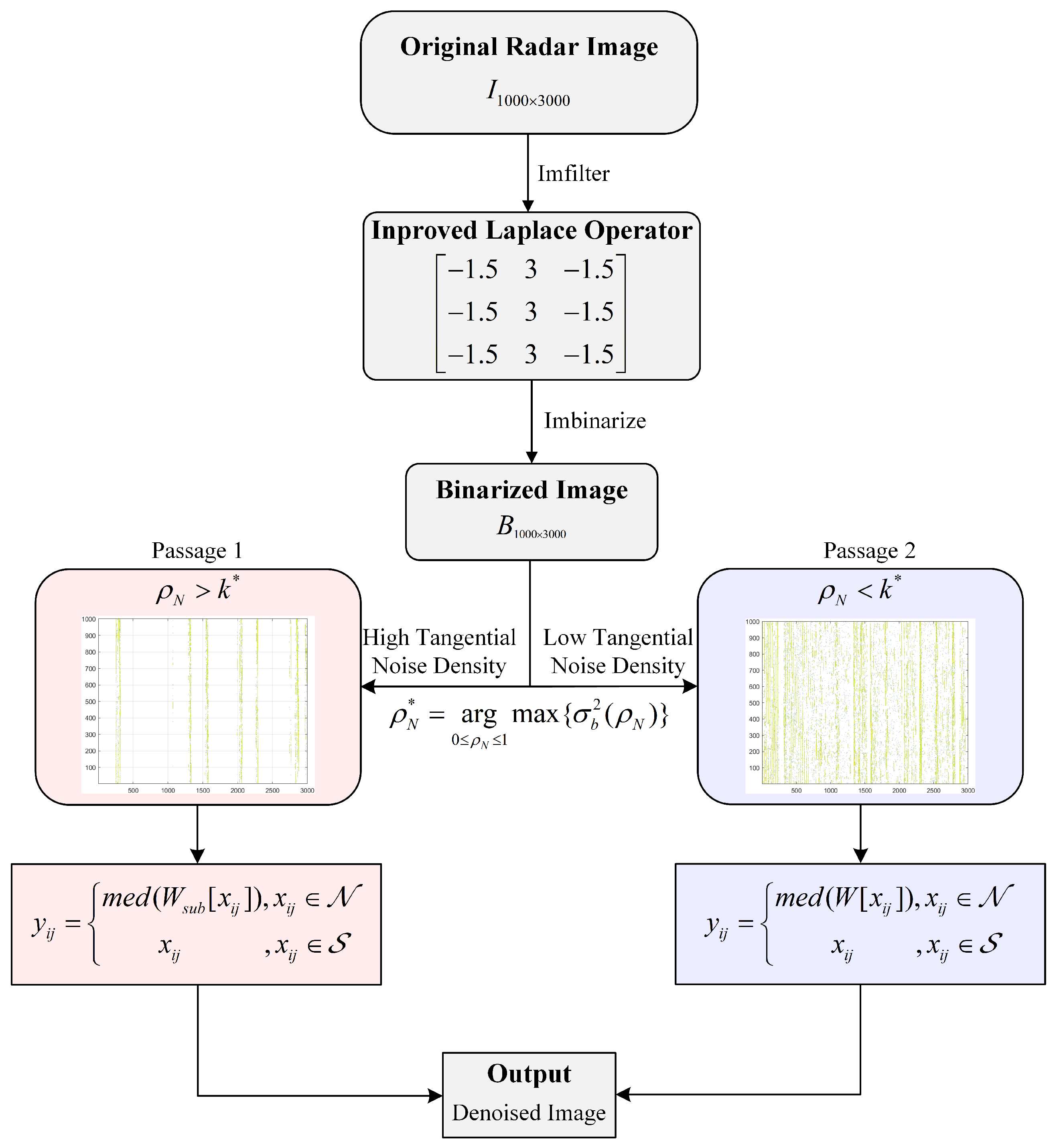
Block Diagram
Specifications
Specifications:
Software Requirements:
· Xilinx ISE14.7 Suite/Vivado2018.3 Tool.
· HDL: Verilog.
Hardware Requirements:
· Microsoft® Windows XP.
· Intel® Pentium® 4 processor or Pentium 4 equivalent with SSE support.
· 512 MB RAM.
· 100 MB of available disk space.
Learning Outcomes
Understand ALU architecture and arithmetic unit design
Learn the working principles of Carry Select Adders
Gain knowledge of Vedic multiplication techniques
Analyze performance trade-offs in VLSI design
Develop practical skills in designing high-speed arithmetic circuits.
Demo Video


Request for Video
 Paper Publishing
Request Call Back
Would you like to receive a free callback now?
Choose the best time for callback:
Leave your message and we will contact you as soon as possible

6-2-85/B, Old Maternity Hospital Road, Thyagaraja Nagar, Tirupati, Andhra Pradesh – 517501
+91 9030333433
+91 9393939065
0877-2261612

Disclaimer - Takeoff Edu Group Projects are not associated or affiliated with IEEE in any way. The IEEE Projects mentioned here are mentioned in the context of student projects, whose ideas are derived from IEEE publications, not projects of or by IEEE.

