A Novel Design of Power-Efficient and Accurate Approximate Multiplier using Approximate Compressors and Approximate Adders
Objective
Approximate multipliers represent a burgeoning paradigm shift in approximate computing. They achieve significant reductions in power consumption, area, and delay at the expense of some computational fidelity. Approximate computing is widely used for better performance in image processing, neural networks, and wireless communication
Abstract
NOTE: Without the concern of our team, please don't submit to the college. This Abstract varies based on student requirements.
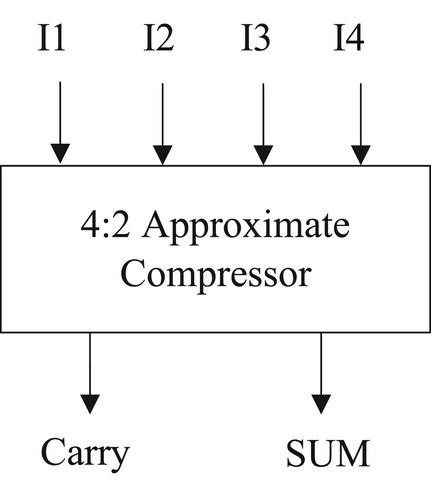
Block Diagram
Specifications
Software Requirements:
VIVADO 2018.3
Learning Outcomes
- Understanding of approximate computing concepts
- Knowledge of multiplier architectures
- Design of approximate compressors and adders
- Implementation using Verilog HDL
- Simulation and synthesis using Xilinx Vivado
- Trade-off analysis between accuracy and efficiency
- Application of low-power VLSI design techniques


 Paper Publishing

Request Call Back
Would you like to receive a free callback now?
Choose the best time for callback:
Leave your message and we will contact you as soon as possible

6-2-85/B, Old Maternity Hospital Road, Thyagaraja Nagar, Tirupati, Andhra Pradesh – 517501
+91 9030333433
+91 9393939065
0877-2261612

Disclaimer - Takeoff Edu Group Projects are not associated or affiliated with IEEE in any way. The IEEE Projects mentioned here are mentioned in the context of student projects, whose ideas are derived from IEEE publications, not projects of or by IEEE.

