A Novel Convolutional Neural Network-Based Approach for Fault Classification in Photovoltaic Arrays
Objective
The main objective of the study is to develop a novel Convolutional Neural Network (CNN)-based approach specifically designed for fault classification in photovoltaic arrays. The aim is to enhance the accuracy and efficiency of fault detection and classification in solar power systems, ultimately improving their performance and maintenance processes.
Abstract
Fault diagnosis in photovoltaic (PV) arrays is essential in enhancing power output as well as the useful life span of a PV system. Severe faults such as Partial Shading (PS) and high impedance faults, low location mismatch, and the presence of Maximum Power Point Tracking (MPPT) make fault detection challenging in harsh environmental conditions. In this regard, there have been several attempts made by various researchers to identify PV array faults. However, most of the previous work has focused on fault detection and classification in only a few faulty scenarios. This paper presents a novel approach that utilizes deep two-dimensional (2-D) Convolutional Neural Networks (CNN) to extract features from 2-D scalograms generated from PV system data in order to effectively detect and classify PV system faults. An in-depth quantitative evaluation of the proposed approach is presented and compared with previous classification methods for PV array faults – both classical machine learning based and deep learning based. Unlike contemporary work, five different faulty cases (including faults in PS – on which no work has been done before in the machine learning domain) have been considered in our study, along with the incorporation of MPPT. We generate a consistent dataset over which to compare ours and previous approaches, to make for the first (to the best of our knowledge) comprehensive and meaningful comparative evaluation of fault diagnosis. It is observed that the proposed method involving fine-tuned pre-trained CNN outperforms existing techniques Our study also highlights the importance of representative and discriminative features to classify faults (as opposed to the use of raw data), especially in the noisy scenario We believe that our work will serve to guide future research in PV system fault diagnosis.
Keywords: SVC, Random Forest, CNN.
NOTE: Without the concern of our team, please don't submit to the college. This Abstract varies based on student requirements.
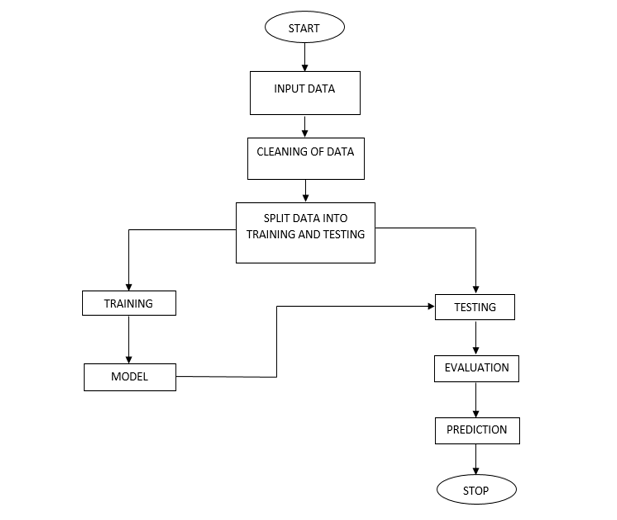
Block Diagram
Specifications
HARDAWARE AND SOFTWARE REQUERMENTS
HARDWARE CONFIGURATIONS:
Processor - I3/Intel Processor
Hard Disk -160 GB
RAM - 8 GB
SOFTWARE CONFIGURATIONS:
Operating System : Windows 7/8/10 .
Server side Script : HTML, CSS & JS.
ID : Pycharm.
Libraries Used : Numpy, IO, OS, Django, keras.
Technology : Python 3.6+.


 Paper Publishing

Request Call Back
Would you like to receive a free callback now?
Choose the best time for callback:
Leave your message and we will contact you as soon as possible

6-2-85/B, Old Maternity Hospital Road, Thyagaraja Nagar, Tirupati, Andhra Pradesh – 517501
+91 9030333433
+91 9393939065
0877-2261612

Disclaimer - Takeoff Edu Group Projects are not associated or affiliated with IEEE in any way. The IEEE Projects mentioned here are mentioned in the context of student projects, whose ideas are derived from IEEE publications, not projects of or by IEEE.

