A DeepSHAP-Based Adversarial Attack on Machine Learning-Based Network Intrusion Detection
Objective
The primary objective of this project is to develop a robust Network Intrusion Detection System (NIDS) using machine learning techniques and evaluate its vulnerability to adversarial attacks through DeepSHAP analysis. The system utilizes Cascade Forest, Probabilistic Neural Network (PNN), and Echo State Network (ESN) models to accurately classify network traffic as normal or malicious. DeepSHAP is employed to identify the most influential features contributing to model predictions and to generate adversarial samples by manipulating these critical features. The project aims to analyze the impact of adversarial attacks on intrusion detection performance and compare the robustness of different machine learning models. Additionally, the system focuses on improving detection accuracy, reducing false alarms, and enhancing the security and reliability of machine learning-based intrusion detection systems
Abstract
Many machine learning-based approaches have been developed for network intrusion detection to identify malicious activities and protect network infrastructures. However, maintaining high detection accuracy and robustness remains a significant challenge due to evolving cyber threats, adversarial attacks, and the increasing complexity of network traffic. In this work, we present a DeepSHAP-based adversarial attack framework for evaluating the robustness of machine learning-based Network Intrusion Detection Systems (NIDS). The proposed methodology employs Cascade Forest, Probabilistic Neural Network, and Echo State Network to learn and classify network traffic patterns into normal and attack categories. DeepSHAP is utilized to identify influential features contributing to model predictions and generate adversarial examples that manipulate these critical features. The generated adversarial samples are used to evaluate the vulnerability and robustness of the intrusion detection models. Experimental results demonstrate the impact of adversarial attacks on detection performance and provide insights into the resilience of different machine learning architectures. The proposed framework contributes to improving the security and reliability of intrusion detection systems by enabling comprehensive robustness assessment and supporting the development of more secure cyber-defense mechanisms.
Keywords: Network Intrusion Detection System (NIDS), DeepSHAP, Adversarial Attack, Cascade Forest, Probabilistic Neural Network, Echo State Network, Explainable Artificial Intelligence (XAI), Machine Learning, Cybersecurity, Network Security.
NOTE: Without the concern of our team, please don't submit to the college. This Abstract varies based on student requirements.
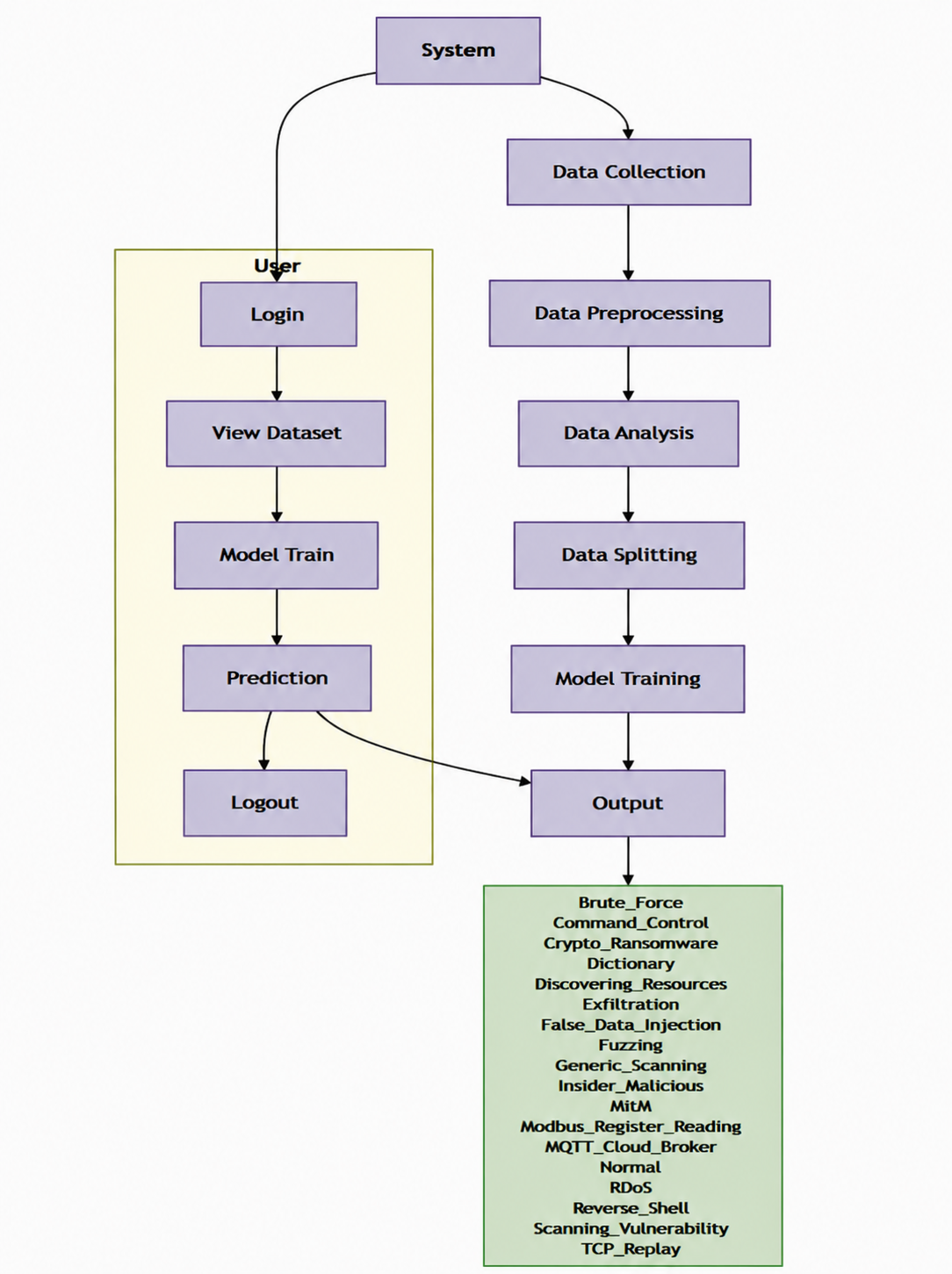
Block Diagram
Specifications
4.1 SOFTWARE REQUIREMENS
Operating System : Windows 7/8/10
Server side Script : HTML, CSS, Bootstrap & JS
Programming Language : Python
Libraries : Flask,Torch, Keras, Pandas,Json, , Numpy , Seaborn
IDE/Workbench : VSCode
Server Deployment : Xampp Server
Database : SQLite
4.2 HARDWARE REQUIREMENTS
Processor - I3/Intel Processor
RAM - 8GB (min)
Hard Disk - 128 GB
Key Board - Standard Windows Keyboard
Mouse - Two or Three Button Mouse
Monitor - Any

Demo Video


Request for Video
 Paper Publishing
Request Call Back
Would you like to receive a free callback now?
Choose the best time for callback:
Leave your message and we will contact you as soon as possible

6-2-85/B, Old Maternity Hospital Road, Thyagaraja Nagar, Tirupati, Andhra Pradesh – 517501
+91 9030333433
+91 9393939065
0877-2261612

Disclaimer - Takeoff Edu Group Projects are not associated or affiliated with IEEE in any way. The IEEE Projects mentioned here are mentioned in the context of student projects, whose ideas are derived from IEEE publications, not projects of or by IEEE.

