A Comprehensive Analysis of the Machine Learning Algorithms in IoT IDS Systems
Objective
This project aims to enhance breast cancer classification by integrating Decision Tree and Random Forest classifiers using an adaptive voting ensemble, improving early detection and treatment planning for better patient outcomes.
Abstract
The Internet of Things (IoT) has revolutionized various industries by enabling seamless connectivity and communication between devices. However, this proliferation of interconnected devices has also introduced significant security challenges, particularly in terms of detecting and mitigating intrusion attempts. In this context, Intrusion Detection Systems (IDS) have become crucial for safeguarding IoT networks. This project presents a comprehensive analysis of various machine learning algorithms applied to IoT IDS systems using a publicly available dataset from Kaggle. The primary objective of this study is to evaluate the performance of different machine learning algorithms, namely Support Vector Machine (SVM), Decision Tree, Random Forest, Gaussian Naive Bayes, AdaBoost, XGBoost, and Logistic Regression, in detecting intrusions in IoT networks. The dataset used in this analysis comprises a variety of features extracted from IoT network traffic, providing a robust foundation for training and testing the algorithms. Each algorithm is meticulously implemented and its performance is assessed using standard metrics such as accuracy, precision, recall, F1-score, and the area under the receiver operating characteristic curve (AUC-ROC). The comparative analysis highlights the strengths and weaknesses of each algorithm in the context of IoT IDS, offering insights into their applicability and effectiveness in real-world scenarios. The findings of this project contribute to the ongoing efforts to enhance the security of IoT networks by identifying the most suitable machine learning techniques for intrusion detection. By leveraging these insights, practitioners and researchers can develop more robust and efficient IDS systems, ultimately fortifying IoT ecosystems against emerging threats.
Keywords: Anomaly Detection, IoT Security, Adaptive Machine Learning, Threat Detection, Comparative Study.
NOTE: Without the concern of our team, please don't submit to the college. This Abstract varies based on student requirements.
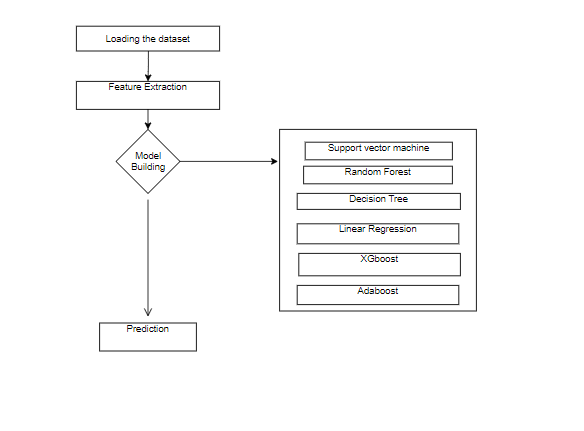
Block Diagram
Specifications
• Processor - I3/Intel Processor
• Hard Disk - 160GB
• Key Board - Standard Windows Keyboard
• Mouse - Two or Three Button Mouse
• Monitor - SVGA
• RAM - 8GB
S/W CONFIGURATION:
• Operating System : Windows 7/8/10
• Server side Script : HTML, CSS, Bootstrap & JS
• Programming Language : Python
• Libraries : Flask, Pandas, Mysql.connector, Os, Scikit-learn, Numpy
• IDE/Workbench : PyCharm
• Technology : Python 3.6+
• Server Deployment : Xampp Server


 Paper Publishing

Request Call Back
Would you like to receive a free callback now?
Choose the best time for callback:
Leave your message and we will contact you as soon as possible

6-2-85/B, Old Maternity Hospital Road, Thyagaraja Nagar, Tirupati, Andhra Pradesh – 517501
+91 9030333433
+91 9393939065
0877-2261612

Disclaimer - Takeoff Edu Group Projects are not associated or affiliated with IEEE in any way. The IEEE Projects mentioned here are mentioned in the context of student projects, whose ideas are derived from IEEE publications, not projects of or by IEEE.

