A Comparative Analysis of Machine Learning Models for Colon Cancer Classification
Objective
This study aims to comprehensively analyze ML models for colon cancer classification, comparing their performance and identifying optimal approaches for adaptive detection. Objectives include evaluating different ML algorithms in distinguishing between cancerous and non-cancerous tissues, assessing model interpretability and scalability, and identifying challenges and opportunities in ML application to colon cancer detection. By achieving these goals, the study aims to inform healthcare practitioners and researchers about the potential of ML-driven adaptive detection in improving diagnosis and management.
Abstract
The field of machine learning (ML) has made significant contributions to the medical domain, notably in the automatic classification of cancer types such as colon cancer. This type of cancer, while generally more common among the elderly, can affect people at any age. The incorporation of ML techniques has minimized the reliance on manual examination and enhanced the capacity to process large datasets in medical research. This paper examines the application of five different ML algorithms—Random Forest (RF), Decision Tree (DT), Support Vector Machine (SVM), Naïve Bayes (NB), and K-Nearest Neighbor (KNN)—in classifying colon cancer across various age demographics. Utilizing advanced gene technology and analysis of gene expression data, this study addresses the challenges posed by the high dimensionality and limited size of such datasets. The findings reveal that most of the ML models employed here have surpassed expected accuracy levels, highlighting their effectiveness in the precise classification and diagnosis of colon cancer. This not only aids in recognizing age-related patterns in the occurrence and development of the disease but also contributes to the advancement of early detection and treatment modalities. Consequently, these developments hold promise for improving patient care and the overall efficiency of healthcare services in dealing with colon cancer. Keywords: Machine Learning (ML), Colon Cancer, Support Vector Machine (SVM), Random Forest (RF), Decision Tree (DT), K-Nearest Neighbor (KNN).
Keywords: Colon Cancer, Support Vector Machine (SVM), Random Forest (RF), Decision Tree (DT), Naïve Bayes (NB), K-Nearest Neighbor (KNN), Gene Expression Data, High Dimensionality, Early Detection, Healthcare Efficiency.
NOTE: Without the concern of our team, please don't submit to the college. This Abstract varies based on student requirements.
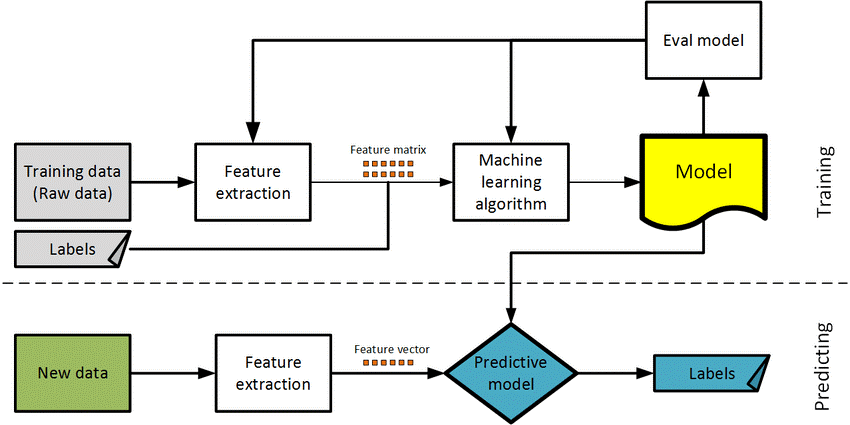
Block Diagram
Specifications
The required hardware configurations are:
Operating system : Windows 7 or 7+
RAM : 8 GB
Hard disc or SSD : More than 500 GB
Processor : Intel 3rd generation or high or Ryzen with 8 GB Ram
The required software configurations are:
Software’s : Python 3.6 or high version
IDE : PyCharm.
Framework : Flask


 Paper Publishing

Request Call Back
Would you like to receive a free callback now?
Choose the best time for callback:
Leave your message and we will contact you as soon as possible

6-2-85/B, Old Maternity Hospital Road, Thyagaraja Nagar, Tirupati, Andhra Pradesh – 517501
+91 9030333433
+91 9393939065
0877-2261612

Disclaimer - Takeoff Edu Group Projects are not associated or affiliated with IEEE in any way. The IEEE Projects mentioned here are mentioned in the context of student projects, whose ideas are derived from IEEE publications, not projects of or by IEEE.

